All Continents in Earth’s History: The 7 Modern Continents, Ancient Landmasses and Supercontinents

Table of Contents
Quick answer: Earth has never had only seven continents. The modern seven are simply the latest arrangement of continental crust.
Over billions of years, that crust has repeatedly collided into vast landmasses—called supercontinents—and later fragmented again. Pangaea was the most recent and most famous, but Earth’s deeper history may include Pannotia, Rodinia, Columbia/Nuna, Kenorland, Ur and Vaalbara, along with major long-lived continents such as Gondwana, Laurasia, Laurentia, Baltica and Siberia.
The familiar map of Asia, Africa, Europe, North America, South America, Antarctica and Australia is only one frame in a planet-length geological film.
Continents move because they are part of tectonic plates. Plates diverge at rifts and mid-ocean ridges, collide to build mountain belts, and disappear or change direction at subduction zones. Over hundreds of millions of years, those movements open oceans, close oceans and rearrange land into entirely different worlds.
The result is the supercontinent cycle: repeated episodes in which much of Earth’s continental crust assembles into one very large landmass, then breaks apart again. Researchers generally use “supercontinent” for a landmass containing most of Earth’s continental crust, although the exact threshold varies among studies. Britannica: Supercontinent · USGS: Plate tectonics
The farther back in time we go, the less complete the evidence becomes. Pangaea is reconstructed in great detail using rock belts, fossils, magnetic data and seafloor history. A proposed Archean landmass such as Vaalbara is much less certain because more than 3 billion years of erosion, metamorphism and tectonic recycling have altered or destroyed much of the original evidence.
What counts as a continent? #
The word continent means different things in geography and geology.
Geographic continents #
In modern geography, Earth is usually divided into seven continents:
- Asia
- Africa
- North America
- South America
- Antarctica
- Europe
- Australia
Europe and Asia are physically joined as Eurasia, while Africa, Europe and Asia can also be treated as the wider connected landmass of Afro-Eurasia. The seven-continent model is a cultural and educational convention, not a list of seven separate tectonic plates.
Geological continents #
Geologists focus on continental crust: thick, relatively buoyant crust made largely of granitic rocks. A geological continent can include submerged continental shelves and fragments that are not separate “continents” in everyday geography.
Examples include:
- Zealandia: a largely submerged continent around New Zealand and New Caledonia.
- Madagascar: a continental fragment that separated from Africa and later India.
- India: once part of Gondwana, later an isolated drifting continental block before colliding with Asia.
- Arabia: a continental plate that rifted away from Africa.
- Greenland: geologically part of the North American continent / Laurentian craton despite its distinct geography.
Supercontinents #
A supercontinent is a much larger assembly containing most of Earth’s continental crust. Pangaea is the clearest example. Earlier candidates are increasingly uncertain because their rocks are older and their original boundaries have been heavily altered.
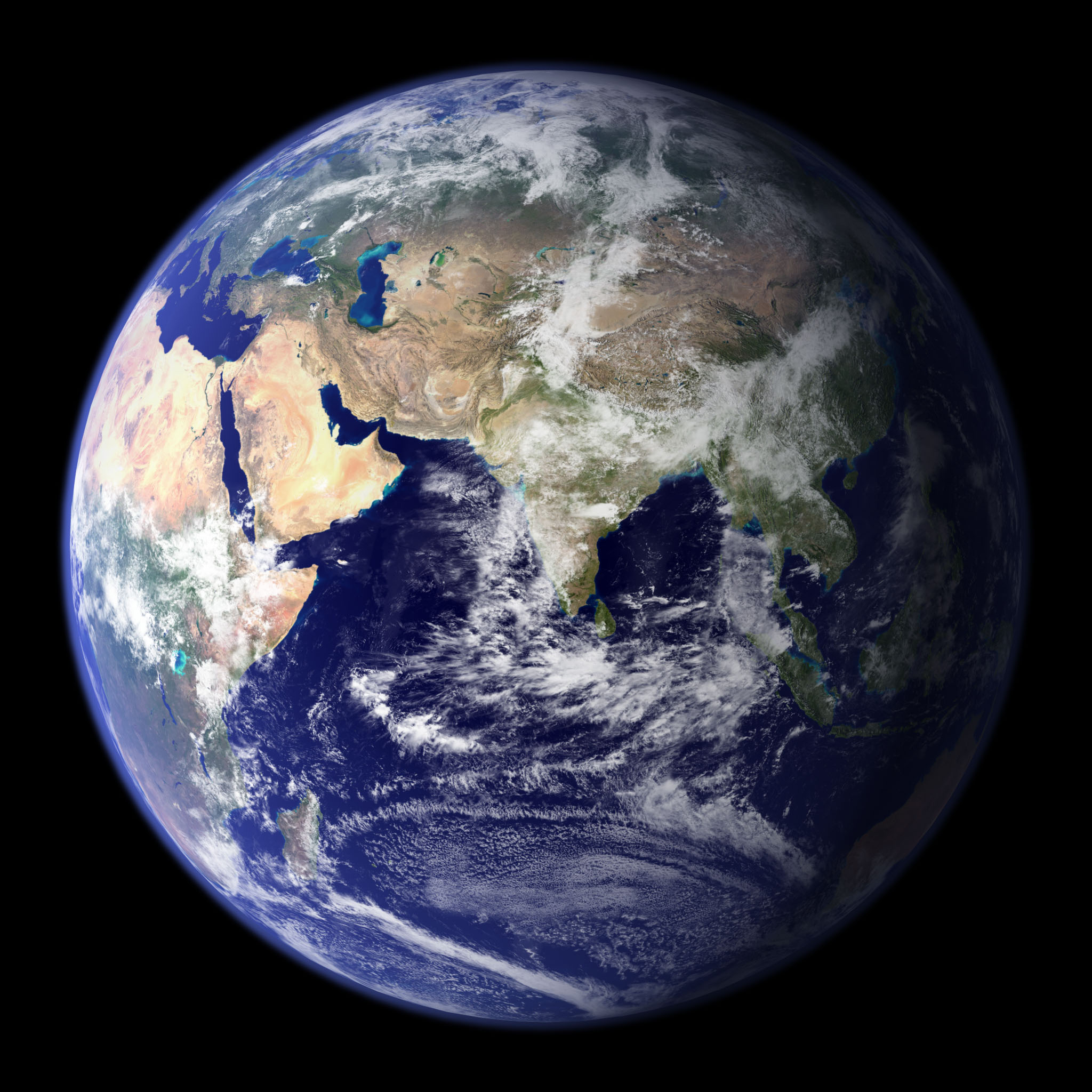
Modern geography is only the current stage of a much older tectonic story. Image via Wikimedia Commons
Timeline of Earth’s major continents #
| Approximate age | Major landmass or continental stage | Status | Earth and life at the time |
|---|---|---|---|
| 4.54–4.0 billion years ago | Hadean Earth | No known stable continents comparable to today | Earth formed, cooled, developed an early crust and oceans; no confirmed fossil life |
| 3.6–2.8 billion years ago | Vaalbara (proposed) | Highly uncertain early continental assembly | Archean Earth with oceans, volcanic activity, microbial life and no confirmed plants or animals |
| About 3.0 billion years ago onward | Ur | Ancient continental core; not necessarily a full supercontinent | Microbial ecosystems dominated; oxygen in the atmosphere remained extremely low |
| 2.7–2.5 billion years ago | Kenorland | Proposed / debated supercontinent | Microbial life dominated; major atmospheric and climate shifts followed its breakup |
| 2.1–1.6 billion years ago | Columbia / Nuna | Widely accepted but reconstruction debated | First eukaryotes existed; no animals, land plants or forests |
| 1.3–0.75 billion years ago | Rodinia | Major supercontinent; arrangement debated | Eukaryotic algae and microbial communities; likely linked to major climatic change and later Snowball Earth episodes |
| About 650–540 million years ago | Pannotia (proposed) and Gondwana | Pannotia debated; Gondwana well supported | Ediacaran organisms appear; early animals diversify near the end of this interval |
| 540–180 million years ago | Gondwana | Major southern supercontinent / continental core | Cambrian marine diversification, first land plants, insects, amphibians, reptiles and early dinosaurs |
| About 425–335 million years ago | Laurussia / Euramerica | Major northern composite continent | Early forests, giant arthropods, fish diversification, tetrapods and coal-swamp ecosystems |
| About 335–175 million years ago | Pangaea | Widely accepted latest supercontinent | Late Paleozoic forests and reptiles; Permian mass extinction; Triassic recovery; early dinosaurs and mammals |
| About 200–66 million years ago | Laurasia and Gondwana fragment | Transitional breakup stage | Dinosaurs dominate; conifers, cycads and ferns are common; flowering plants later spread widely |
| 66 million years ago–today | Modern continents | Current arrangement | Mammals, birds, flowering plants, grasslands and humans diversify across a fragmented world |
Dates in deep time are approximate. Continental assembly is rarely one event on one date; it usually takes tens to hundreds of millions of years, with collisions and rifting occurring at different times along different margins.
The seven modern continents #
The present-day continents are still moving. The Atlantic Ocean is widening at the Mid-Atlantic Ridge, East Africa is slowly rifting, India continues to push into Asia, and Australia is moving north toward Southeast Asia.
Asia #
Asia is the largest modern continent and part of the wider Eurasian landmass. It contains old continental cores—including Siberia, North China, South China, India and Arabia—that were once separated by oceans and later assembled through collision.
- How it formed: Asia grew through long-term collision and accretion. India’s collision with Eurasia, beginning roughly 50 million years ago, built and continues to uplift the Himalaya and Tibetan Plateau.
- Earlier identity: Much of Asia did not exist as one coherent continent during Pangaea. Siberia, China blocks, India, Arabia and smaller terranes had separate tectonic histories.
- Modern life: Asia contains Arctic tundra, taiga, deserts, temperate forests, tropical rainforest, mountain ecosystems and monsoon landscapes.
- Future: India will keep converging with Eurasia, while Australia continues moving north.
Africa #
Africa is a relatively stable continent centred on several ancient cratons, including the Kaapvaal, Congo, Tanzania and West African cratons.
- How it formed: Most of Africa’s continental core was assembled in Precambrian time. It later became central to Gondwana and then Pangaea.
- Earlier identity: Africa was joined to South America, Antarctica, India, Madagascar, Arabia and Australia within Gondwana.
- Modern life: It ranges from the Sahara and Namib deserts to the Congo rainforest, Mediterranean ecosystems, savannas and highland regions.
- Future: The East African Rift may eventually split part of eastern Africa from the rest of the continent, creating a new ocean basin over geological time.
Europe #
Europe is a western peninsula of Eurasia in physical geography, but a separate continent in many cultural and educational models.
- How it formed: Europe was assembled from ancient fragments including Baltica, Avalonia and parts of Laurentia. Collisions between these blocks created mountain belts such as the Caledonides and, later, the Alps.
- Earlier identity: Europe spent different periods attached to Laurentia/North America, Baltica, Gondwana-derived terranes and Eurasia.
- Modern life: Europe is dominated by temperate forests, grasslands, Mediterranean habitats, alpine regions and northern boreal environments.
- Future: Africa is moving north toward Europe, and the Mediterranean Basin is gradually being reshaped by convergence.
North America #
North America is built around the ancient Laurentian craton, a stable core that includes much of Canada, Greenland and the central United States.
- How it formed: Laurentia was involved in several ancient continental configurations, including proposed reconstructions of Columbia, Rodinia and later Laurussia and Pangaea.
- Earlier identity: During Pangaea, North America was joined to Europe and northwestern Africa. Matching mountain belts and fossil distributions helped establish continental-drift theory.
- Modern life: Arctic tundra, boreal forest, temperate forest, prairie, desert, wetlands and tropical ecosystems occur across the continent.
- Future: North America is moving generally westward away from Europe as the Atlantic Ocean continues to open.
South America #
South America was a core part of Gondwana and fit tightly against Africa before the South Atlantic opened.
- How it formed: Its older crust includes the Amazonian, São Francisco and Río de la Plata cratons, later assembled within Gondwana.
- Earlier identity: South America joined Africa, Antarctica, Australia, India and Arabia in Gondwana; fossil and glacial evidence across these now-separated lands was central to Wegener’s continental-drift case.
- Modern life: It contains the Amazon rainforest, Andes, Atacama Desert, Pampas, Patagonia, Cerrado and Atlantic Forest.
- Future: The Andes will continue evolving as the Nazca Plate subducts beneath western South America.
Antarctica #
Antarctica is a modern continent covered by a vast ice sheet, but it was not always frozen.
- How it formed: Antarctica was a major component of Gondwana and remained linked to Australia, India, Africa and South America at different times.
- Earlier identity: During the Paleozoic and early Mesozoic, parts of Antarctica supported forests, wetlands and dinosaur ecosystems. Fossil plants and vertebrates show that its climate was once far warmer.
- Modern life: Most life is marine or coastal: penguins, seals, seabirds, algae, lichens, mosses and microbial communities.
- Future: Antarctica is currently isolated by the Southern Ocean and circumpolar current, which helps maintain its cold climate.
Australia #
Australia is the emergent portion of a larger continental region that includes the mostly submerged continent of Zealandia.
- How it formed: Australia was part of eastern Gondwana with Antarctica, India and Madagascar. It separated from Antarctica gradually during the Cenozoic.
- Earlier identity: During Gondwana time, Australia lay much farther south and experienced different climates, including cooler and sometimes polar conditions.
- Modern life: Its long isolation contributed to high endemism: marsupials, monotremes, diverse reptiles, eucalyptus woodlands, ancient conifers and rich reef ecosystems.
- Future: Australia is moving north toward Southeast Asia and may eventually collide with island arcs and parts of Asia.
Ancient continents and continental blocks #
Not every important ancient landmass was a global supercontinent. Some were cratons—old, stable pieces of continental crust—or large continental blocks that repeatedly joined and separated from larger assemblies.
Vaalbara: a possible Archean continental assembly #
| Detail | Description |
|---|---|
| Approximate age | About 3.6–2.8 billion years ago |
| Main proposed pieces | The Kaapvaal Craton in southern Africa and the Pilbara Craton in Western Australia |
| Status | Proposed and debated; often described as Earth’s earliest possible supercontinent or supercraton |
| Earth conditions | Archean Earth had oceans, active volcanism, little free oxygen in the atmosphere and no confirmed plants or animals |
| Life | Microbial mats, bacteria and archaea; cyanobacteria may have formed stromatolites and contributed oxygen locally |
| What happened | The proposed assembly broke apart or ceased acting as a connected unit; later tectonic events heavily altered its rocks |
Vaalbara is named from Vaal in the Kaapvaal Craton and bara from the Pilbara Craton. The idea is based on similarities in rock ages, structures and paleomagnetic signals between southern Africa and Western Australia. However, not all geologists accept that these cratons formed one coherent continent, and its exact shape remains unknown. Britannica: Supercontinents · Geological Society of London: supercontinent reconstructions
At this time, Earth had no forests, no insects, no fish, no dinosaurs and no land animals. Life was microscopic and overwhelmingly marine or shoreline-based. Stromatolites—layered structures built by microbial communities—are among the most visible fossil evidence from this ancient world.
Ur: an ancient continental nucleus #
| Detail | Description |
|---|---|
| Approximate age | Formed around 3.0 billion years ago; pieces persisted through later supercontinents |
| Likely remnants | Parts of India, Australia, Madagascar and possibly other southern cratons |
| Status | Often described as one of Earth’s earliest continents, but not necessarily a supercontinent |
| Earth conditions | Ocean-dominated planet with volcanic island arcs and limited atmospheric oxygen |
| Life | Microbes, cyanobacteria and stromatolite-forming communities |
| What happened | Ur’s crust was incorporated into later continental assemblies, especially Gondwana |
Ur is often described as an unusually old, long-lived continent. Unlike Pangaea, it did not simply appear, exist as one giant map-shaped landmass, and vanish. Instead, its ancient crust survived through later collisions and became part of younger continental systems.
The term is useful because continental crust can outlive the continents it once formed. A craton may be recycled into multiple later supercontinents while retaining ancient minerals, rock belts and magnetic signatures. Britannica: Supercontinents
Kenorland: an Archean–Paleoproterozoic candidate #
| Detail | Description |
|---|---|
| Approximate age | About 2.7–2.5 billion years ago |
| Main proposed pieces | Parts of present-day North America, Greenland, Scandinavia, southern Africa and Australia |
| Status | Proposed supercontinent; details and even the degree of unity remain debated |
| Earth conditions | Major changes in atmosphere and oceans occurred around and after this interval |
| Life | Microbial ecosystems, cyanobacteria, stromatolites and early photosynthetic communities |
| What happened | Rifting and tectonic reorganisation; breakup may have contributed to climate and ocean-chemistry changes |
Kenorland is usually reconstructed as a large assembly near the end of the Archean Eon. Its breakup roughly overlaps with a major transition in Earth history: the Great Oxidation Event, when atmospheric oxygen rose substantially around 2.4 billion years ago.
Researchers do not claim that continental breakup alone “caused” oxygenation. However, tectonics, volcanic gases, chemical weathering, ocean chemistry and microbial photosynthesis were deeply connected. The breakup of large landmasses can alter coastlines, nutrient delivery, weathering and carbon cycling—all of which affect the conditions in which life evolves. Britannica: Kenorland overview · Geological Society of London
Columbia or Nuna: the first widely accepted Proterozoic supercontinent #
| Detail | Description |
|---|---|
| Approximate age | Roughly 2.1–1.6 billion years ago; some reconstructions focus on 1.8–1.5 billion years ago |
| Alternative name | Nuna |
| Main proposed pieces | Laurentia, Baltica, Siberia, North China, India, Australia, Antarctica and other ancient cratons |
| Status | Widely accepted as a major supercontinent, though its detailed arrangement remains debated |
| Earth conditions | The planet was largely oceanic; atmospheric oxygen was higher than in the Archean but still far below modern levels |
| Life | Eukaryotic cells existed; algae and microbial communities dominated; no confirmed animals, land plants or forests |
| What happened | Rifting began in the Mesoproterozoic and set the stage for later continental reorganisation into Rodinia |
Columbia, also called Nuna, was the first supercontinent whose existence is widely accepted by many geologists, although maps of exactly how its continental pieces fit together remain uncertain.
The key point is that Earth’s continents were not static: ancient cores now found in North America, Scandinavia, Siberia, India, Australia and Antarctica likely shared tectonic histories within a much larger Proterozoic assembly. Britannica: Supercontinent · PBS Eons: Supercontinent timeline
Life was still entirely unlike the world of Pangaea. There were no trees, flowers, fungi on land, insects, fish, reptiles or dinosaurs. The biosphere was dominated by microbes and simple eukaryotes in the oceans.
Rodinia: the supercontinent before the Snowball Earth interval #
| Detail | Description |
|---|---|
| Approximate age | Assembled mainly about 1.3–0.9 billion years ago; began breaking up around 800–750 million years ago |
| Main proposed core | Laurentia, broadly surrounded by other continental blocks in many reconstructions |
| Status | Major, widely recognised supercontinent; exact layout is debated |
| Earth conditions | Long-lived supercontinent with extensive interiors, changing ocean circulation and possible links to severe global glaciations |
| Life | Eukaryotic algae, microbial mats, early multicellular organisms and simple marine ecosystems |
| What happened | Rifting broke Rodinia apart; the resulting configuration preceded Cryogenian “Snowball Earth” glaciations and later animal diversification |
Rodinia is one of the best-known pre-Pangaea supercontinents. Its name comes from the Russian word rodina, meaning “motherland.” Many reconstructions place Laurentia—the ancient core of North America and Greenland—near its centre.
Rodinia’s exact shape is unresolved. Scientists compare ancient mountain belts, sedimentary basins, rock chemistry and paleomagnetism to test possible fits. The broad conclusion is stronger than any single map: much of Earth’s continental crust was assembled into a giant Proterozoic landmass, which later rifted apart. Britannica: Supercontinent · Yale: Reconstructing pre-Pangaean supercontinents
The breakup of Rodinia occurred before or during a dramatic climatic chapter called the Cryogenian Period, when Earth may have experienced near-global glaciations. The “Snowball Earth” hypothesis remains an active field of research, but geological evidence shows glacial deposits at unusually low paleolatitudes. Smithsonian Ocean: Earth through time
Pannotia: a short-lived and debated bridge between Rodinia and Gondwana #
| Detail | Description |
|---|---|
| Approximate age | About 650–540 million years ago |
| Alternative label | Sometimes called the “Vendian supercontinent” |
| Main proposed pieces | Gondwana plus Laurentia, Baltica and Siberia in a short-lived configuration |
| Status | Debated; accepted by some reconstructions and questioned by others |
| Earth conditions | Late Neoproterozoic Earth recovering from major glaciations; shallow seas and changing ocean chemistry |
| Life | Ediacaran biota, early animals, microbial mats and increasingly complex marine ecosystems |
| What happened | Fragmented relatively quickly, opening new oceans and leaving Gondwana as the largest long-lived continental mass |
Pannotia is sometimes placed between Rodinia and Pangaea, but its status is more controversial than Pangaea or Rodinia. Some geologists interpret evidence for a short-lived global assembly around 600 million years ago; others see a looser configuration of continents rather than a true supercontinent.
What is not in doubt is that this was a pivotal biological interval. The Ediacaran Period saw the rise of large, complex organisms before the Cambrian diversification of animals. EARTH Magazine: Pannotia · PBS Eons: supercontinent timeline
Gondwana, Laurasia and other major ancient continents #
These landmasses were not all supercontinents in the strictest sense. They were, however, enormous and long-lived continental systems that shaped the evolution of life.
Gondwana: the great southern continent #
| Detail | Description |
|---|---|
| Approximate age | Assembled by roughly 600 million years ago; fragmented mainly from about 180 million years ago onward |
| Included | Africa, South America, Antarctica, Australia, India, Madagascar, Arabia and smaller fragments |
| Status | Major continental assembly; central part of Pannotia in some models and southern half of Pangaea later |
| Earth conditions | Moved across high southern latitudes; experienced warm periods, extensive forests and late Paleozoic glaciation |
| Life | Ediacaran organisms, Cambrian marine animals, early land plants, Glossopteris forests, reptiles, dinosaurs, mammals and flowering plants |
| What happened | Rifting separated Africa from South America, India from Madagascar, and Australia from Antarctica; its pieces now form much of the Southern Hemisphere |
Gondwana may be the most important ancient continent after Pangaea because it existed in some form for hundreds of millions of years. At different points it included most modern southern continents and several of the largest continental blocks on Earth.
Its fossil record was central to the acceptance of continental drift. The seed fern Glossopteris, the freshwater reptile Mesosaurus, the land reptile Lystrosaurus and the cynodont Cynognathus are found on continents now separated by oceans. Their distributions make sense when South America, Africa, India, Antarctica and Australia are reconstructed as connected Gondwanan land. USGS: Plate tectonics and fossil evidence · Britannica: Gondwana
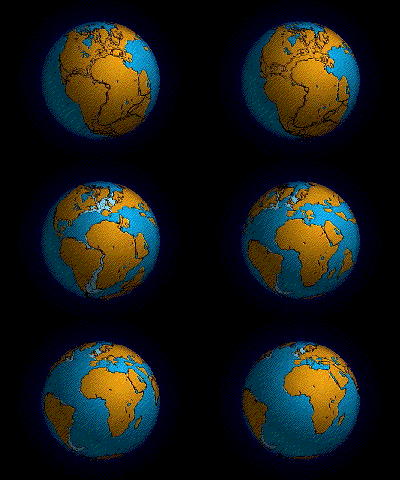
Fossil distributions across reconstructed Gondwana helped demonstrate that today’s southern continents were once connected. Image via Wikimedia Commons
Gondwana’s flora and fauna #
- Ediacaran and Cambrian: Marine ecosystems diversified in surrounding shallow seas.
- Ordovician and Silurian: Early plants colonised land; Gondwana occupied high southern latitudes in many reconstructions.
- Devonian and Carboniferous: Forests spread; early tetrapods and insects evolved.
- Permian: Glossopteris seed ferns became widespread, especially across southern Gondwana.
- Triassic and Jurassic: Dinosaurs, early mammals, conifers, cycads, ginkgos and ferns flourished.
- Cretaceous and Cenozoic breakup: Isolation drove distinctive regional evolution, especially in Australia, Antarctica, South America and Madagascar.
Laurentia: the ancient core of North America #
| Detail | Description |
|---|---|
| Approximate age | Ancient craton assembled mainly in Precambrian time; active in many later continental configurations |
| Modern remnants | Most of North America and Greenland |
| Status | Craton / continent-sized block, not a separate global supercontinent |
| Earth conditions | Shifted from tropical to polar latitudes repeatedly over deep time |
| Life | Hosted marine shelves, Paleozoic forests, dinosaurs, mammals and later Ice Age ecosystems |
| What happened | Laurentia survived as the core of North America after participating in Columbia, Rodinia, Laurussia and Pangaea |
Laurentia is the ancient continental nucleus beneath much of modern North America and Greenland. It was a key component of Rodinia, later collided with Baltica and Avalonia to form Laurussia, and eventually became the northwestern part of Pangaea.
Its long survival illustrates another important geological point: the oldest continental cores can persist while their coastlines, neighbours, climate zones and ecosystems change completely.
Baltica: the ancient northern European craton #
| Detail | Description |
|---|---|
| Approximate age | Precambrian craton; distinct Paleozoic continent |
| Modern remnants | Scandinavia, Finland, parts of northern and eastern Europe |
| Status | Continental block / craton |
| Earth conditions | Drifted independently through Paleozoic oceans before collision with Laurentia |
| Life | Marine invertebrate-rich shelves, later terrestrial forests and Paleozoic animals |
| What happened | Collided with Laurentia and Avalonia to help form Laurussia; later became part of Pangaea and Eurasia |
Baltica was once an independent continent separated from Laurentia by the Iapetus Ocean. When that ocean closed, collisions built mountain belts whose worn remnants now appear in places as far apart as Scandinavia, Scotland, Ireland, Greenland and eastern North America.
Siberia, North China and South China #
These were major continental blocks with separate histories.
| Continental block | Key history | Later fate |
|---|---|---|
| Siberia / Angara | An independent Paleozoic continent in many reconstructions, often at high northern latitudes | Collided into Eurasia during the assembly of Pangaea-related landmasses |
| North China Craton | Ancient stable crust with a complex history; often separate from Pangaea proper | Later joined Asia through long tectonic processes |
| South China Craton | A distinct continental block, sometimes near Gondwana or equatorial seas | Became part of East Asia through later collisions |
| Tarim | Small continental block now beneath northwestern China | Accreted into Asia during Paleozoic–Mesozoic tectonic evolution |
These blocks are important because maps that show Pangaea as a single, perfect “all land” continent simplify a more complicated reality. During some intervals, parts of North China, South China and other terranes remained separated by oceans or marginal seas.
Avalonia: a microcontinent that helped build Europe #
Avalonia was a smaller Paleozoic continental terrane that rifted from Gondwana and later collided with Baltica and Laurentia.
Today, rocks with Avalonian history underlie parts of:
- England and Wales
- Ireland
- Belgium and the Netherlands
- Northern Germany
- Newfoundland
- Nova Scotia
- Coastal New England
Its story explains why pieces of Britain, Ireland, Canada and the eastern United States share related Paleozoic geological histories.
Laurussia or Euramerica: the northern Paleozoic continent #
| Detail | Description |
|---|---|
| Approximate age | Mainly about 425–335 million years ago |
| Included | Laurentia, Baltica and Avalonia |
| Status | Major composite continent; a key precursor to Pangaea |
| Earth conditions | Equatorial and tropical regions supported extensive wetlands and coal-forming forests |
| Life | Early vascular plants, giant arthropods, sharks, ray-finned fishes, lobe-finned fishes, early tetrapods and amniotes |
| What happened | Collided with Gondwana and other blocks during Pangaea’s assembly |
Laurussia, also called Euramerica, formed as the Iapetus Ocean closed. It included the cores of North America and Europe and sat near equatorial latitudes for much of its history.
This was the world of Carboniferous coal swamps: dense forests of lycophytes, horsetails, ferns and seed plants. High oxygen levels and warm wetlands supported giant arthropods, including enormous dragonfly relatives. Early tetrapods and the first amniotes appeared during this broader Paleozoic interval. PBS Eons: supercontinents and life
Laurasia: Pangaea’s northern half #
| Detail | Description |
|---|---|
| Approximate age | Recognisable from the breakup of Pangaea, roughly 200–66 million years ago |
| Included | North America, Europe and much of Asia |
| Status | Northern continental mass produced by Pangaea’s breakup |
| Earth conditions | Jurassic and Cretaceous greenhouse climates; widening Atlantic and changing seaways |
| Life | Dinosaurs, pterosaurs, marine reptiles, early mammals, conifers, cycads, ferns and later flowering plants |
| What happened | Continued to fragment and rearrange into North America, Europe and Asia |
When Pangaea began to rift, it split broadly into Laurasia in the north and Gondwana in the south. Laurasia later separated further as the Atlantic opened between North America and Europe.
The Mesozoic world was not dominated by flowering plants at first. Early dinosaurs lived among conifers, cycads, ginkgos, ferns and horsetails. Flowering plants became more widespread later, especially during the Cretaceous. Smithsonian Magazine: dinosaurs and ancient landscapes
Earth’s supercontinents #
Pangaea: the latest and best-known supercontinent #
| Detail | Description |
|---|---|
| Approximate age | Began assembling around 335 million years ago; fully assembled by roughly 300 million years ago; began breaking apart about 225–200 million years ago |
| Name meaning | Greek for “all Earth” or “all land” |
| Major components | Gondwana, Laurussia and additional blocks including Siberia and parts of Asia |
| Surrounding ocean | Panthalassa, with the Tethys and other seaways along parts of its margins |
| Earth conditions | Huge continental interior with strong seasonal extremes and extensive arid regions; coastal and equatorial zones were more diverse |
| Life | Late Paleozoic forests, synapsids, reptiles, amphibians; then post-extinction Triassic life, dinosaurs, pterosaurs and early mammals |
| What happened | Continental rifting opened the Atlantic and Indian oceans, splitting Pangaea into Laurasia and Gondwana and then today’s continents |
Pangaea existed from the late Paleozoic into the early Mesozoic, roughly 300–200 million years ago. It was the latest full supercontinent and therefore the easiest to reconstruct.
North America, Europe, northwestern Africa and South America fit together not only in coastline shape but also in mountain belts, rock sequences, glacial deposits and fossil distributions. The Appalachian Mountains, for example, share a deeper history with mountain belts in Greenland, Britain, Scandinavia and northwest Africa. USGS: What was Pangaea? · USGS: Historical perspective on continental drift

Pangaea around 250 million years ago. Image via Wikimedia Commons
What Pangaea was like #
Pangaea was not uniformly desert, but its size created enormous interior regions far from ocean moisture. Those areas often experienced strong temperature swings and seasonal rainfall. Coastal regions, river basins, uplands and equatorial zones held more varied ecosystems.
During the late Permian, Pangaea contained:
- Conifers, seed ferns, ginkgophytes, horsetails and other gymnosperm-dominated vegetation.
- Amphibians and reptiles.
- Synapsids, the evolutionary group that includes mammals and many famous pre-mammalian animals.
- Marine ecosystems surrounding the continent that included brachiopods, ammonoids, sharks, bony fish and reef organisms.
At the end of the Permian, around 252 million years ago, Earth experienced its largest known mass extinction. The event devastated marine and terrestrial ecosystems. In the early Triassic, survivors such as the dicynodont Lystrosaurus became widespread before ecosystems diversified again.
Later, during the Triassic, the first dinosaurs and mammal relatives evolved. By the Jurassic, Pangaea’s breakup had begun in earnest. USGS: Pangaea breakup · Smithsonian: the dinosaur world
Why Pangaea broke apart #
Pangaea did not explode or sink. It rifted gradually as tectonic forces stretched the continental crust.
- Heat and mantle processes weakened parts of the continental interior.
- Rifts formed, allowing magma to rise and create volcanic zones.
- Continental crust thinned and fractured.
- New oceanic crust formed between separating blocks.
- The Atlantic Ocean widened between North America, Africa, Europe and South America.
- Continued rifting split Gondwana into Africa, South America, India, Antarctica, Australia, Madagascar and Arabia.
The USGS describes an early three-pronged rift between Africa, South America and North America. As rifting continued, the growing Atlantic became a new ocean basin. USGS: What was Pangaea?
Proposed future supercontinent: Amasia, Pangaea Proxima and Aurica #
Earth’s tectonic story is ongoing. Scientists have proposed several possible future supercontinents, but these are scenarios, not predictions.
| Proposed name | Basic idea | Why it remains uncertain |
|---|---|---|
| Amasia | The Americas may move north and collide with Asia near the Arctic | Plate motions can change, and future subduction patterns are hard to predict |
| Pangaea Proxima / Pangaea Ultima | The Atlantic may eventually close, bringing the Americas back toward Africa and Europe | Depends on whether and where new subduction zones develop in the Atlantic |
| Aurica | Both Atlantic and Pacific ocean systems could reorganise into a different supercontinent configuration | Based on modelling assumptions that cannot be verified so far ahead |
These scenarios are useful reminders that the present continents are not the endpoint of Earth history. They are a temporary arrangement.
Why continents assemble and break apart #
Plate tectonics is the engine #
Earth’s lithosphere—the rigid outer shell—consists of tectonic plates moving over a hotter, more deformable mantle beneath. Continental crust rides on these plates.
At different boundaries, plates can:
- Diverge: move apart and form rifts or new ocean crust.
- Converge: collide, subduct, close oceans and build mountain ranges.
- Transform: slide past one another along faults.
- Accrete terranes: attach island arcs, microcontinents and crustal fragments to larger continents.
This is why mountain belts can preserve the seams of ancient collisions, and why fossils of the same ancient species appear on modern continents now divided by oceans. USGS: Plate tectonics
The supercontinent cycle #
The supercontinent cycle is the long-term pattern of assembly and breakup. It affects:
- Ocean circulation
- Sea level
- Volcanism
- Mountain building
- Atmospheric carbon dioxide
- Weathering of rocks
- Nutrient flow into the oceans
- Global climate
- The distribution and evolution of life
A giant continent can create dry interiors because moisture has difficulty reaching areas far from coasts. Fragmented continents create more coastlines and shallow seas, often increasing habitat diversity.
Research links supercontinent assembly and breakup to long-term changes in climate, sea level and atmospheric carbon dioxide, though no single variable controls the entire system. The supercontinent cycle and Earth’s long-term climate
Flora and fauna through continental history #
The continents did not merely change position. Their movements helped shape evolutionary opportunities and barriers.
| Time interval | Continental setting | Characteristic flora | Characteristic fauna |
|---|---|---|---|
| Archean, before 2.5 billion years ago | Small early cratons and proposed assemblies such as Vaalbara and Ur | No land plants; microbial mats, cyanobacteria, stromatolites | Microbial life only; no confirmed animals |
| Paleoproterozoic, 2.5–1.6 billion years ago | Kenorland breakup and Columbia/Nuna assembly | Cyanobacteria, algae and microbial communities | Single-celled and early eukaryotic life |
| Mesoproterozoic, 1.6–1.0 billion years ago | Columbia fragments; Rodinia begins assembling | Eukaryotic algae and microbial communities | Mostly microscopic eukaryotes; no complex land ecosystems |
| Neoproterozoic, 1.0–541 million years ago | Rodinia, Pannotia debate, Gondwana assembly | Algae, microbial mats and early multicellular organisms | Ediacaran organisms, early sponges and the first animal lineages |
| Cambrian–Ordovician, 541–444 million years ago | Gondwana dominates the south; other continents dispersed | Early land plants begin appearing late in the interval | Trilobites, brachiopods, molluscs, early fish and diverse marine invertebrates |
| Silurian–Devonian, 444–359 million years ago | Laurentia, Baltica and Avalonia converge; Gondwana persists | Vascular plants, early forests, lycophytes, ferns and early seed plants | Jawed fish, sharks, insects, arachnids and first tetrapods |
| Carboniferous–Permian, 359–252 million years ago | Laurussia collides with Gondwana; Pangaea forms | Coal-swamp forests, giant lycophytes, ferns, seed ferns, conifers | Giant arthropods, amphibians, early reptiles and synapsids |
| Triassic–Jurassic, 252–145 million years ago | Pangaea then early Laurasia and Gondwana | Conifers, cycads, ginkgos, ferns and horsetails | Dinosaurs, pterosaurs, marine reptiles, crocodile-line archosaurs and early mammals |
| Cretaceous, 145–66 million years ago | Gondwana and Laurasia fragment further | Flowering plants diversify and spread; conifers remain important | Diverse dinosaurs, birds, insects, mammals and marine reptiles |
| Cenozoic, 66 million years ago–today | Modern continents take shape | Flowering plants, grasslands, modern forests and tundra | Mammals, birds, modern marine ecosystems and humans |
Plants did not colonise land until long after the earliest continents formed. The first land plants appear in the Paleozoic, hundreds of millions of years ago—not in the Archean or early Proterozoic, when Earth’s continents were already billions of years old.
Reliable introductory sources #
- USGS: What was Pangaea?
- USGS: Historical perspective on plate tectonics and Pangaea
- USGS: Plate tectonics educational resources
- Britannica: Supercontinent overview
- Britannica: Gondwana
- Smithsonian Ocean: Ocean through time
Academic and research-focused sources #
- Geological Society of London: Four-dimensional context of Earth’s supercontinents
- Yale Earth & Planetary Sciences: Reconstructing pre-Pangaean supercontinents
- Earth Magazine: Piecing together the puzzle of Pannotia
- National Library of Medicine: The supercontinent cycle and long-term climate
- Paleobiology Database: searchable fossil-occurrence database used by researchers
- Paleomap Project: paleogeographic maps and reconstructions by Christopher Scotese